

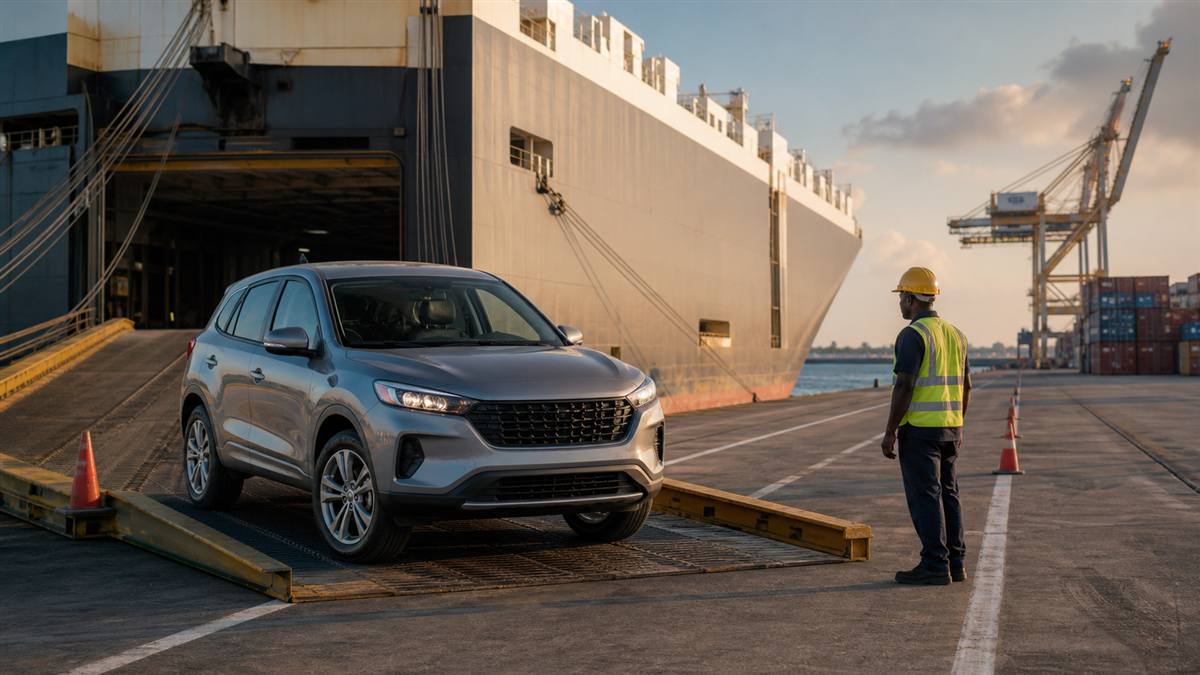
Buying a vehicle abroad is only the first commitment. For a Ghana-bound used car, the paperwork must match the car before the ship sails. That is the difference between arriving at Tema with a workable clearance file and discovering a problem while the vehicle is already accruing port time.
This is a practical pre-shipment checklist for a private importer. It is not a quote or a substitute for a Customs ruling: costs and requirements can change, so confirm the vehicle against the current official tools before committing money.
1. Start with the steering wheel, VIN and basic identity
Ghana Revenue Authority (GRA) says right-hand-drive vehicles are not allowed into Ghana unless the Minister of Trade grants a dispensation on application. A bargain from a right-hand-drive market is therefore not a normal “sort it out at the port” purchase. Check the steering position before bidding, and save the VIN/chassis number, make, model and year exactly as shown in the sale record. GRA’s vehicle-import guidance specifically uses the VIN, model, year and make for its duty check.
2. Build a small document pack before the vessel departs
At the vehicle-clearing stage, GRA identifies the Bill of Lading or Waybill and the title as relevant documents. Put legible originals or the required shipping originals where your appointed clearing professional can access them; keep scans separately, and ensure the VIN is consistent across the auction/seller record, title and shipping instructions. The GRA vehicle-import page also urges importers to retain all relevant purchase and shipping documentation for a smoother clearance process.
Before the car reaches port, confirm the consignee details, shipping line instructions and any authority your representative will need. Ghana Shippers’ Authority advises importers to submit cargo-clearance documents—including the bill of lading, commercial invoice and packing list—well before a vessel arrives, and to obtain applicable licences, permits and certificates before arrival. Read its paperless-clearance guidance.

3. Estimate duty with the official inputs—not a social-media figure
GRA provides a Used Vehicle Duty Calculator through ICUMS. Its vehicle-import guidance says the calculation uses the VIN, model, year and make; it also explains that the manufacturer’s original purchase price, vehicle age, exchange rate, freight and insurance affect the process. That means another importer’s “duty paid” figure is not a dependable budget for your car.
Use the official calculator as a planning tool, retain the result with your file, and leave a contingency in your landed-cost budget for charges outside the vehicle’s headline purchase price. GRA lists examples such as local shipping-line, terminal-handling, possible safe-bond and agent charges separately from the tax liability. See GRA’s current breakdown.
4. Decide early who will make the declaration
Do not assume private ownership means informal self-clearance. GRA says a person who wants to clear a vehicle without an agent must first register with the Customs Division as a clearing agent and complete the required approval process. That requirement is set out in GRA’s vehicle-clearing guidance. If you use a representative, agree in writing who supplies each document, who receives the shipping notice, and how you will receive the final Customs entry documents.
5. Treat Customs clearance and DVLA registration as two separate finish lines
Port release does not make the vehicle road-ready. For vehicle registration, the DVLA currently lists the vehicle itself, original Customs entry documents, a vehicle-inspection report from a designated private vehicle testing station (PVTS), passport photographs and a valid Ghana Card among the owner requirements. Its process includes presenting the vehicle and Customs entry at a PVTS, then taking the vehicle and Customs documents to a DVLA registration centre for authentication and processing. Check the DVLA’s live registration requirements before booking or travelling.
A newly imported car should not be treated as permanently free to drive merely because it has left the port. In a March 2026 enforcement notice, DVLA said Drive-from-Port (DP) stickers are for moving freshly imported vehicles from the port to a designated area while registration is pending. Read the DVLA notice and follow the current instructions for your vehicle rather than relying on an expired sticker or dealer plate.
A 10-minute pre-shipment sign-off
- Confirm it is left-hand drive and record the VIN, make, model and year.
- Match those details across the title, seller/auction record and Bill of Lading.
- Run the GRA ICUMS duty check with the vehicle’s real details.
- Choose the Customs declaration route before the vessel arrives.
- Budget and schedule for the separate DVLA inspection and registration steps after clearance.
The useful mindset: buy a car only after you can describe its document trail from seller to ship, Customs entry and DVLA registration. It is less exciting than choosing trim or colour, but it is the part that protects the purchase.
Sources
- Ghana Revenue Authority — Vehicle Importation and Clearing
- Ghana Revenue Authority — ICUMS and Used Vehicle Duty Calculator
- DVLA Ghana — Vehicle Registration services and requirements
- DVLA Ghana — Enforcement notice on DV plates and Drive-from-Port stickers (March 2026)
- Ghana Shippers’ Authority — Paperless port-clearance guidance
Image credits: Cover and in-article figure are distinct original Vroom Africa editorial images generated with OpenAI; no third-party image licence is required.