

Buying Guide — South Africa. This is a desk-researched planning guide, not electrical or legal advice. Confirm the vehicle specification, your local supply conditions and the proposed installation with the relevant dealer, electricity supplier and registered contractor.
An EV can be an easy daily car when charging fits the place you already park. But the useful buying question is not simply “does it have a charger?” It is whether the car, your home and your routine work together. Use these seven questions before you sign.
1. Where will the car sleep most nights?
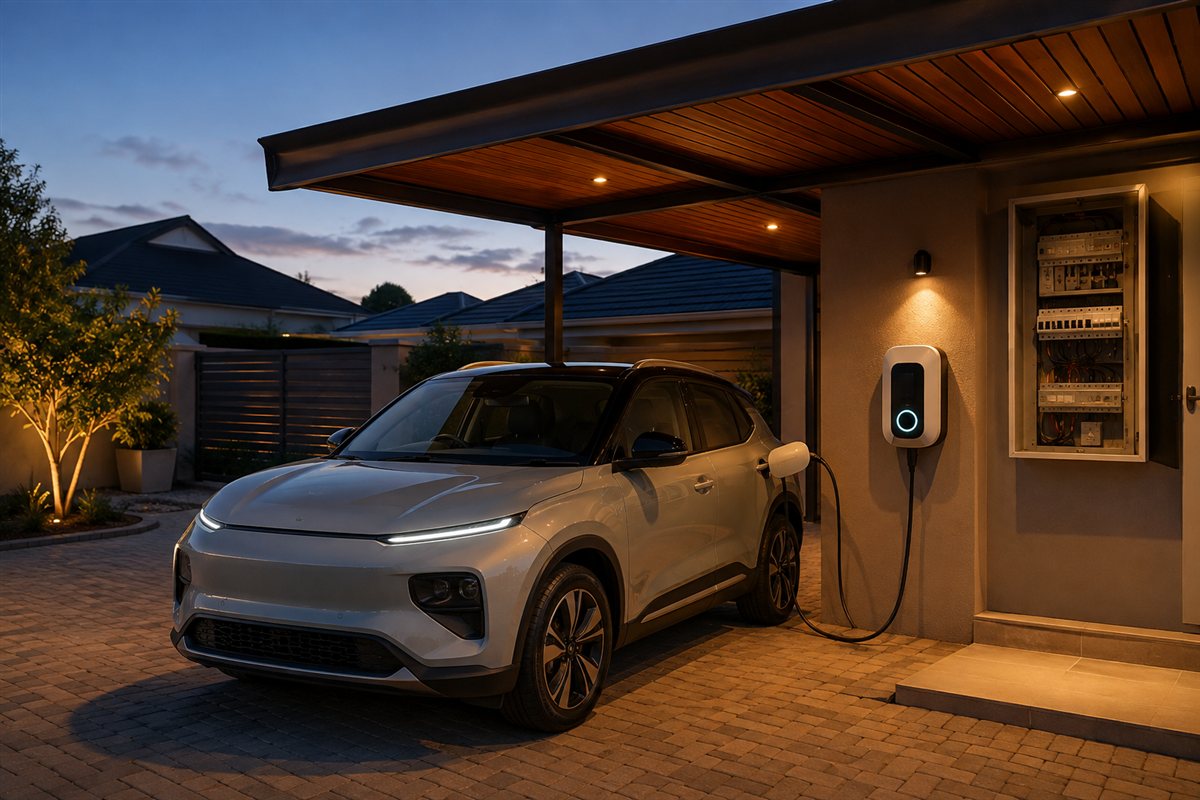
Start with the physical parking bay. Can the car reach the proposed charge point without a cable crossing a walkway, gate or driveway? Is the bay secure, weather-protected enough for the equipment chosen, and available for the hours you normally park? A home solution only helps if it suits your actual overnight routine.
2. What AC charging equipment is included — and what does the car accept?
Ask the dealer to state in writing the vehicle’s AC charging capability, the supplied cable or charger, connector type, warranty conditions and any optional home hardware. Charging power is not a single universal number: BMW South Africa, for example, describes home cables and compatible industrial sockets of up to 11 kW, while its Wallboxes can provide up to 22 kW; the usable result still depends on the vehicle and installation. BMW South Africa’s home-charging guide
That makes a quote easier to compare. Request the charge-point rating, cable length, mounting position and any load-management feature separately, rather than treating “charger included” as a complete specification.
3. Has a registered contractor assessed the existing installation?
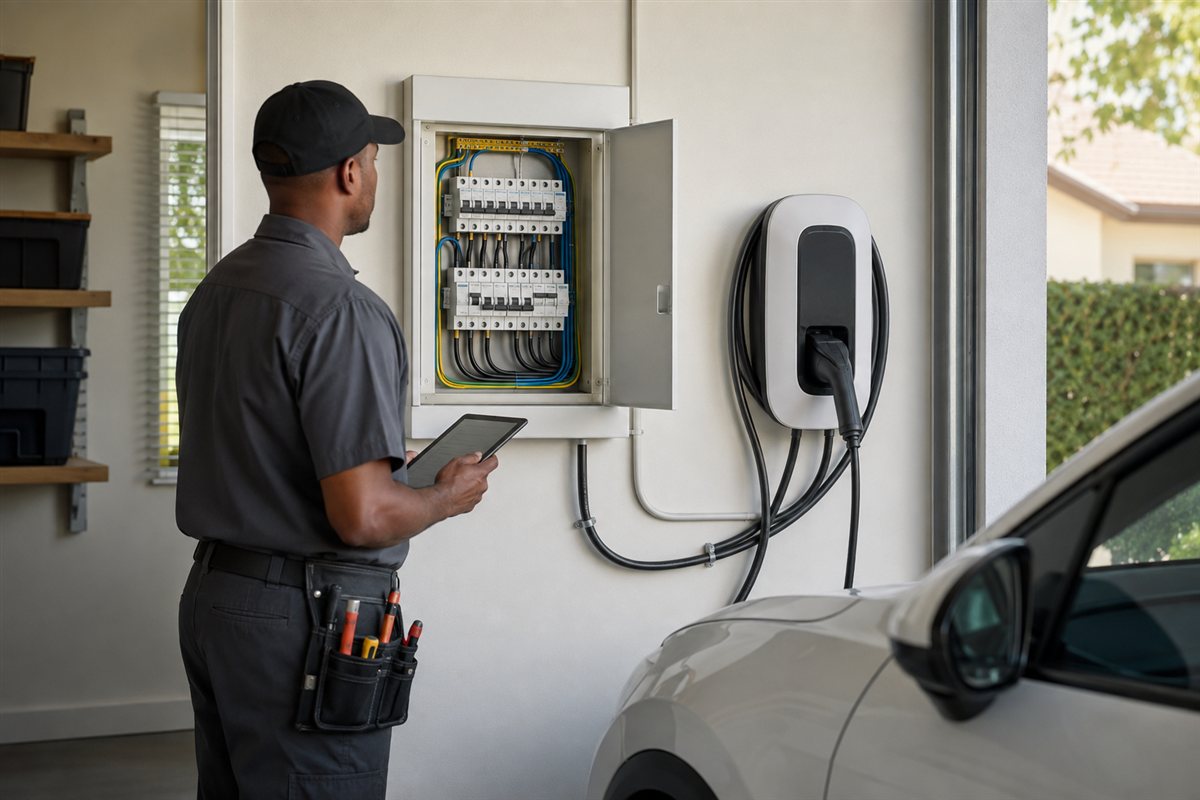
This is the non-negotiable question. South Africa’s Electrical Installation Regulations require users or lessors to hold a valid Certificate of Compliance (CoC), and require a CoC for at least an addition or alteration to an existing installation. Electrical Installation Regulations, 2009 (Regulation 7)
Ask for an on-site assessment before buying hardware. The Department of Employment and Labour says electrical work and CoC issuance should involve competent, legally registered contractors who inspect and test the installation. Department guidance on CoC requirements
4. What else runs when you arrive home?
Think about the evening load in your own household: cooking, geyser, heating or cooling, pool equipment and the EV. The contractor should assess the installation rather than adding the car to an already stressed circuit. Eskom warns against overloading plug points and notes that prolonged use beyond a plug point’s rating can cause overheating, fire or shock. Eskom electricity-safety guidance
Bring twelve months of electricity bills to the conversation if you can. They are more useful than a generic running-cost claim because municipal tariffs and household consumption patterns differ.
5. What is the plan during an outage or a disrupted evening?
A private charge point relies on the home supply being available unless the broader system has been designed to operate differently. Eskom’s outage guidance is plain: when supply to the home is switched off, electrically powered household services are unavailable. Eskom load-shedding FAQ
Before choosing an EV, map a backup routine: a nearby public charger, a workplace option, or a charging window earlier in the day. BMW currently says its Charging network has more than 650 charging points across Africa, but treat any network map as a route-planning starting point and check its live availability before relying on it. BMW South Africa public-charging information
6. Are you a homeowner, tenant or sectional-title resident?
Ownership changes the conversation. A homeowner can commission an assessment; a tenant or sectional-title resident may also need the owner, body corporate or managing agent involved before cabling, common-area work or metering arrangements are agreed. Get permissions and responsibility for future maintenance in writing before equipment is ordered.
7. What will the complete, documented installation cost?
Compare like with like. A useful written quote identifies the equipment, installation work, testing, CoC arrangements, warranty and exclusions. Ask who will make good walls or paving, who maintains the unit, and whether extra work is needed if the electrical assessment finds a limitation. The lowest hardware price is not necessarily the lowest finished-installation price.
A better test drive question
During a test drive, ask the dealer to demonstrate the charge-port routine and show the settings that control AC charging. Then take the vehicle’s written specification to a registered contractor. If the car, home assessment and typical weekly travel all line up, you are evaluating an EV as an ownership fit — not only as a showroom purchase.