

A quick, practical safety check for the school run, a family visit or a long weekend—written for South African families. This is general safety information, not a substitute for your child-restraint and vehicle manuals or current legal advice.
South Africa’s legal baseline is important but it is not the whole safety conversation. A January 2026 government report says infants and children under three must be secured in an appropriate, correctly fitted child restraint; it also places responsibility on the adult or driver. The useful family habit is broader: every child gets a restraint that fits their body, the particular vehicle and the journey—every time the wheels move.
That matters in a region where road-traffic death rates are highest. The World Health Organization reports that child restraints can reduce deaths among infants by 71%, while stressing that effective road safety needs safe vehicles, safe speeds, safe roads and safe road users together.
Start with the seat and the child—not the age on the box
Use the restraint only within the child’s stated height and weight limits, and follow its manual exactly. A child who has not outgrown a rear-facing restraint should stay rear-facing; the safest point to change direction is set by the restraint manufacturer’s limits, not by a birthday or a hurried travel plan. WHO’s child-restraint guidance notes that a restraint must suit the child’s age and size, meet a safety standard and be correctly installed to work as intended. Its road-safety guidance also explains why adult belts are not a full substitute for a correctly sized child restraint.
A two-minute loading routine
1. Read both manuals together. The vehicle manual identifies approved seating positions, belt-routing details and whether there are dedicated child-seat anchorages. The restraint manual tells you the permitted installation method and the child limits. If the two do not clearly work together, stop and seek help from the restraint maker, dealer or a qualified fitting service.
2. Put the restraint in the rear whenever the vehicle layout allows. WHO says children are safer in the rear than the front. Never place a rear-facing restraint in front of an active passenger airbag; the vehicle and restraint manuals govern the safe positions for your specific car.
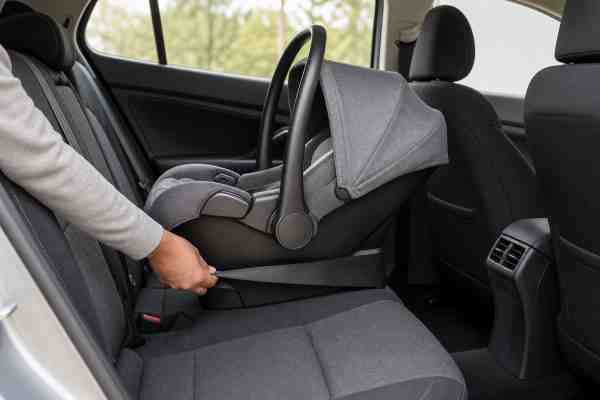
3. Check the installation before the child gets in. Fasten the restraint using the exact belt path or anchorage method in its instructions. Remove slack as instructed, lock any required belt mechanism, and use a top tether only where both the vehicle and restraint specify it. Avoid improvised straps, cushions or add-on accessories that are not approved by the restraint manufacturer.
4. Fit the harness to the child on every trip. The harness should lie flat, with no twists; buckle and tighten it according to the manual. Bulky jackets, loose blankets tucked under the harness and a hurried “just around the corner” exception can all undermine the fit. Dress the child in normal layers, secure the harness, then place a blanket over it if needed.
5. Do a final car check. Ensure the restraint is not being used on a seat position the vehicle manual prohibits, keep loose luggage secured, and make sure every other passenger is belted up. The driver should not set off until every child is restrained.
When a child moves up
Moving to the next stage should be a fit decision. Keep a child in the current restraint until they reach that model’s maximum stated size, then move to the next suitable restraint—not straight to an adult belt because it feels convenient. WHO notes that adult belts do not protect children as they do adults and that children are safer in the rear; its best-practice discussion uses roughly 135 cm or around age 10 as a point before which an adult belt generally does not yet fit well. Treat that as context, not a replacement for the child seat’s and vehicle’s instructions.
For a booster-stage child, check that the lap portion sits low across the hips and the shoulder portion crosses the middle of the shoulder and chest, never the neck or face. If the belt cannot sit that way in your car, the child is not ready for that seating arrangement.
Buying or borrowing a restraint? Be conservative
Choose a new restraint from a reputable retailer where possible, keep its instructions and registration information, and confirm that it is compatible with your vehicle. Be especially cautious with a used seat: do not use one with an unknown crash history, missing labels or instructions, visible damage, altered parts, a recall concern or an expiry date that has passed. A restraint’s safety depends on its complete, approved components and correct installation—not on how clean it looks.
The under-three rule is a floor, not a finish line. Build the loading check into your routine and it becomes one of the simplest ways to make every family trip safer.
Sources
- South African Government News Agency — Call to prioritise child safety (2026)
- World Health Organization — Road traffic injuries fact sheet (2026)
- World Health Organization — Child-restraint law and safety guidance
- World Health Organization — Occupant Restraints road-safety manual (2023)
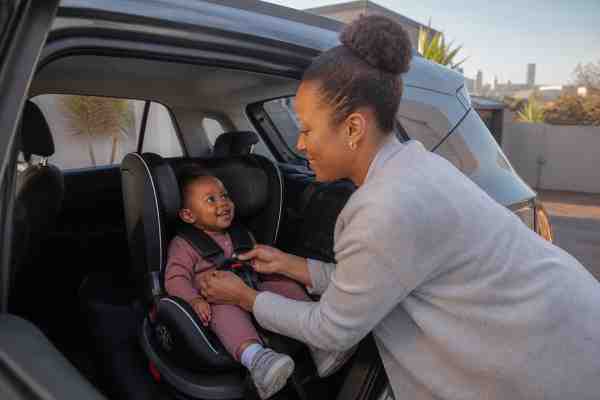
Cover image credit: Original Vroom Africa editorial illustration generated with OpenAI, 2026. It depicts an adult securing a child in a rear seat and is illustrative only.