
Tyres are easy to overlook because they keep working quietly—until a pothole, a long intercity run or a fully loaded weekend exposes a problem. A short, repeatable check can catch common warning signs before the trip begins. This is not a substitute for a professional inspection after damage, but it is a useful habit for every driver.
1. Start with the number specified for your car
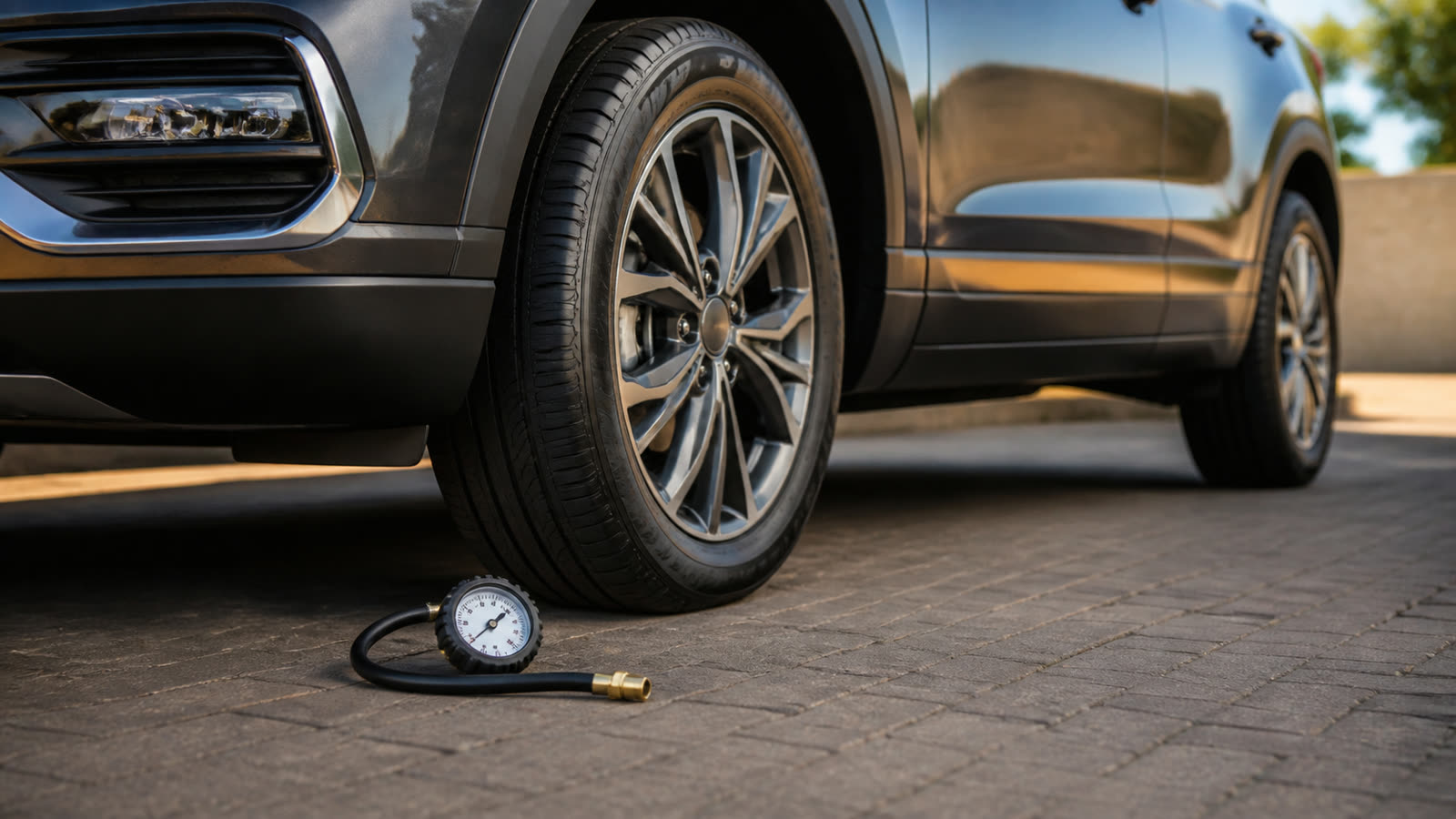
Use the cold-inflation figure on the vehicle’s tyre-information placard or in its owner’s manual—not the “max” figure moulded into the tyre sidewall. The placard is typically at the driver’s door opening, and it may list different pressures for a full load. NHTSA advises checking when tyres are cold: before driving, or after the car has stood for at least three hours. It also recommends a monthly check, including the spare. NHTSA’s tyre-safety guidance
Whether your gauge reads bar, kPa or psi, use the unit shown on the placard and set each tyre to that vehicle-specific figure. A dashboard tyre-pressure warning is helpful, but NHTSA notes that these systems are intended to warn of significant under-inflation; they do not replace a routine gauge check. NHTSA: tyres and TPMS
2. Give every tyre a 60-second visual inspection
Walk around the car before a long journey and look for a sidewall bulge, a cut, exposed cord, a deep crack, an object embedded in the tread, or wear that is much heavier on one edge. Check the tread-wear indicators too: when the tread is level with these raised bars, NHTSA says the tyre is due for replacement. Uneven wear or a new vibration is a reason to have the wheel, alignment and suspension checked rather than simply fitting more air. NHTSA: tread and damage checks
Road hazards make this especially worthwhile. The Automobile Association of South Africa flags potholes, debris and high curbs as everyday tyre risks, and advises slowing down over potholes rather than striking them at speed. AA South Africa: tyre safety advice
3. Read the age code before trusting a low-mileage tyre
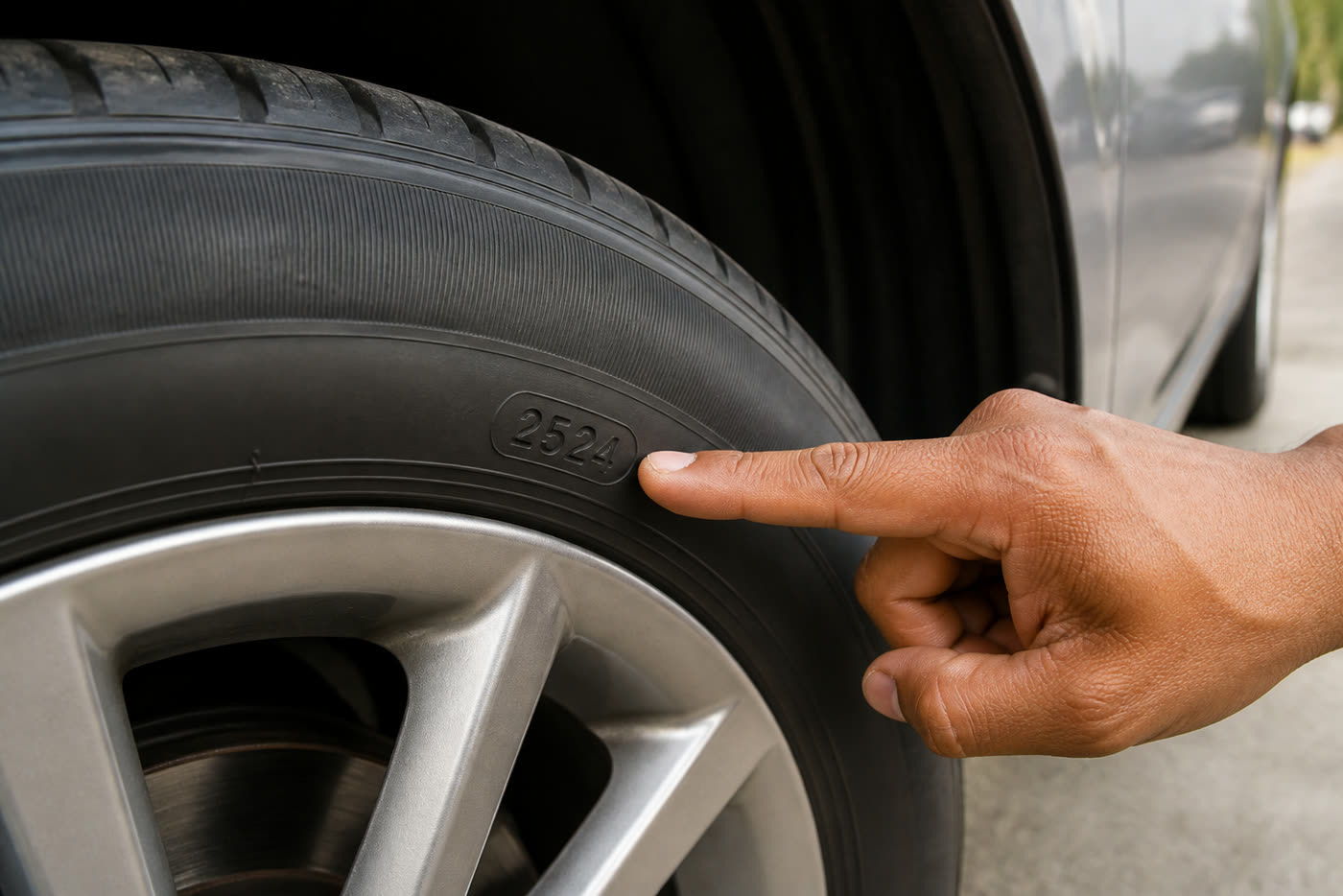
A tyre can look healthy yet be older than expected, particularly if it has spent time in storage or is a rarely used spare. On tyres carrying a DOT marking, the last four digits identify the manufacturing week and year: for example, 2524 means week 25 of 2024. The complete marking may be visible on only one side of the tyre, so turn the wheel or ask a tyre professional to help if you cannot find it. Continental: how to read tyre age
Age is one factor, not a licence to ignore condition. Michelin recommends a professional inspection after five years of use and replacing tyres—including spares—ten years after manufacture even where tread remains. Treat that as manufacturer guidance, and follow any stricter instruction in your vehicle handbook or local regulations. Michelin: wear, age and replacement
4. Do not forget the spare and the load
The spare needs pressure, tread, a sound sidewall and an age check just like the four tyres on the ground. Before a holiday drive, also match the placard’s loaded-vehicle guidance to the passengers and luggage you are actually carrying. If your vehicle uses a space-saver spare, follow its speed and distance limits in the owner’s manual; it is a temporary solution, not a fifth ordinary wheel.
A simple pre-trip routine
- Check all five pressures cold with a gauge.
- Compare them with the door-placard values, including any full-load setting.
- Inspect tread, sidewalls and valve caps; book a professional check after an impact or if you find damage.
- Look for the four-digit manufacture code, especially on a recently bought used car or spare.
- Carry the locking-wheel-nut key, jack and wheel tool only if your car has a usable spare—and confirm they are present before departure.
Ten minutes in the driveway is cheap insurance against turning a routine journey into a roadside delay.
Sources
- National Highway Traffic Safety Administration — Tire Safety Ratings and Awareness
- Continental — Tyre Age
- Michelin — When to Replace Tires: Wear, Age, and Safety Signs
- Automobile Association of South Africa — Tyres are critical safety features
Cover image: tyre-pressure check illustration generated for Vroom Africa with OpenAI. In-article image: tyre manufacture-date-code illustration generated for Vroom Africa with OpenAI.